


In healthcare, poor visibility when using medical devices can lead to critical errors that compromise patient safety.
Even the slightest device malfunction or error can compromise patient safety and treatment effectiveness.
Integrating backlighting into medical HMI (Human-Machine Interface) devices improves usability, minimizes errors and accelerates response times in critical situations.
This simple upgrade improves device efficiency, making healthcare professionals' jobs easier and ultimately leading to better patient outcomes.
Discover how backlighting enhances the functionality of infusion pumps, patient monitors, ventilators, diagnostic imaging equipment, surgical retractor lighting and home-use devices.
What is a medical HMI, and how is it used in healthcare settings?
A medical HMI is a system that enables healthcare professionals to interact with medical devices through displays, touchscreens and control panels.
It helps monitor patient data, adjust settings and receive alerts to enhance patient care in healthcare settings.
The Role of Backlighting in Medical HMI Devices
For medical devices to be effective, interface visibility is crucial.
Even the most advanced devices can become challenging to use if clarity is compromised, especially in environments like operating rooms or low-light hospital wards.
According to the Patient Safety Network, while technology has the potential to enhance standardization and streamline workflows, poor implementation can add to the clinician's burden, causing issues like alert fatigue and missed notifications, which can ultimately lead to errors.
In critical situations, backlighting becomes a game-changer.
For instance, during an emergency in a dimly lit ICU, a backlit infusion pump allows a nurse to quickly program and administer medication without struggling to see the screen.
This feature ensures that healthcare workers can make critical decisions promptly, regardless of the lighting conditions.
Investing in medical HMI devices with enhanced features, such as backlighting, improves patient safety and delivers significant financial benefits.
Thin Backlighting for Compact Diagnostic Test Readers
Compact diagnostic test readers need backlighting that is clear, uniform and thin enough to fit within small device housings. These devices often have limited space, so the lighting system cannot add bulk or make the interface harder to use. Good backlighting helps users read results, status indicators and display information with less visual strain.
Thin backlighting also supports better device design because it helps engineers keep the reader compact while still improving visibility. In clinical and point-of-care settings, that clarity can make the device easier to operate and more reliable for users.
For interface designs that require clear illumination in compact spaces, medical HMI backlighting can support better readability, usability and visual feedback.
Why Ultra-Thin Lighting Matters in Compact Medical Interfaces
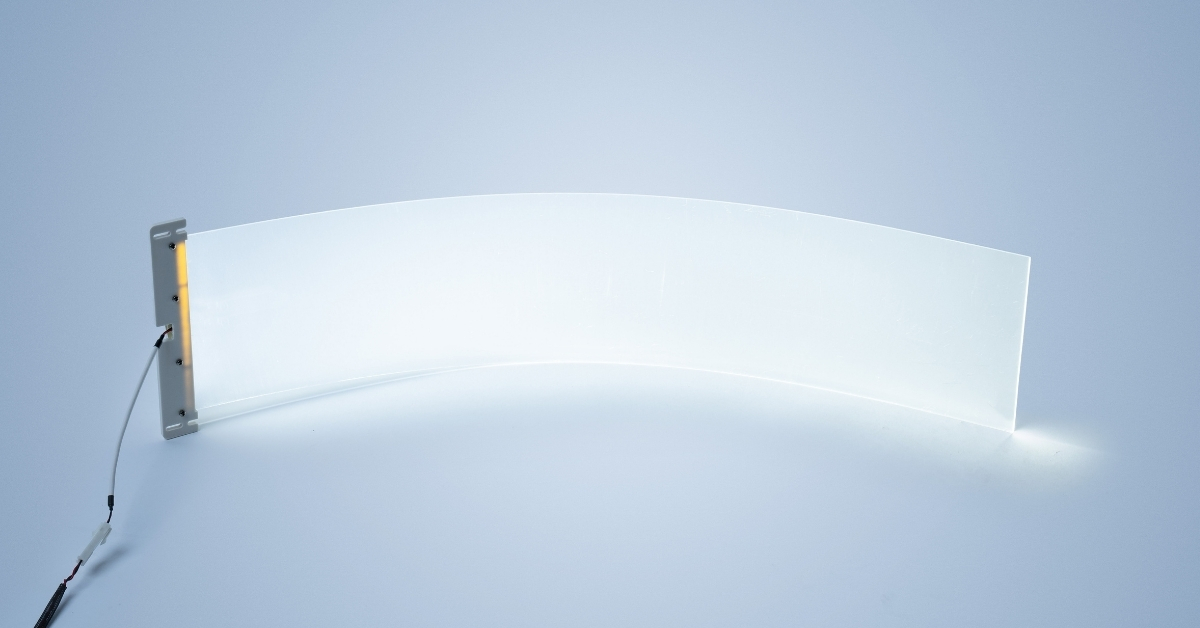
Compact medical interfaces have limited room for lighting components, which makes thickness an important design factor. Ultra-thin lighting helps support smaller device housings while still giving users clear visual feedback.
Flexible lighting can also help when interfaces need to fit curved, low-profile or space-constrained designs. This gives engineering teams more freedom to support visibility without adding unnecessary bulk to the device.
Light Uniformity and Hot Spot Control in Medical HMI Backlighting
Light uniformity is critical in medical HMI backlighting because uneven brightness can make screens, indicators and controls harder to read. Hot spots can create glare or distract users from important device information, especially in clinical settings where quick interpretation matters.
A well-designed backlighting system helps spread light evenly across the interface. This supports clearer visibility, smoother user interaction and more reliable device feedback during patient care.
The Impact of Backlighting on Touchscreen Usability
Pumps
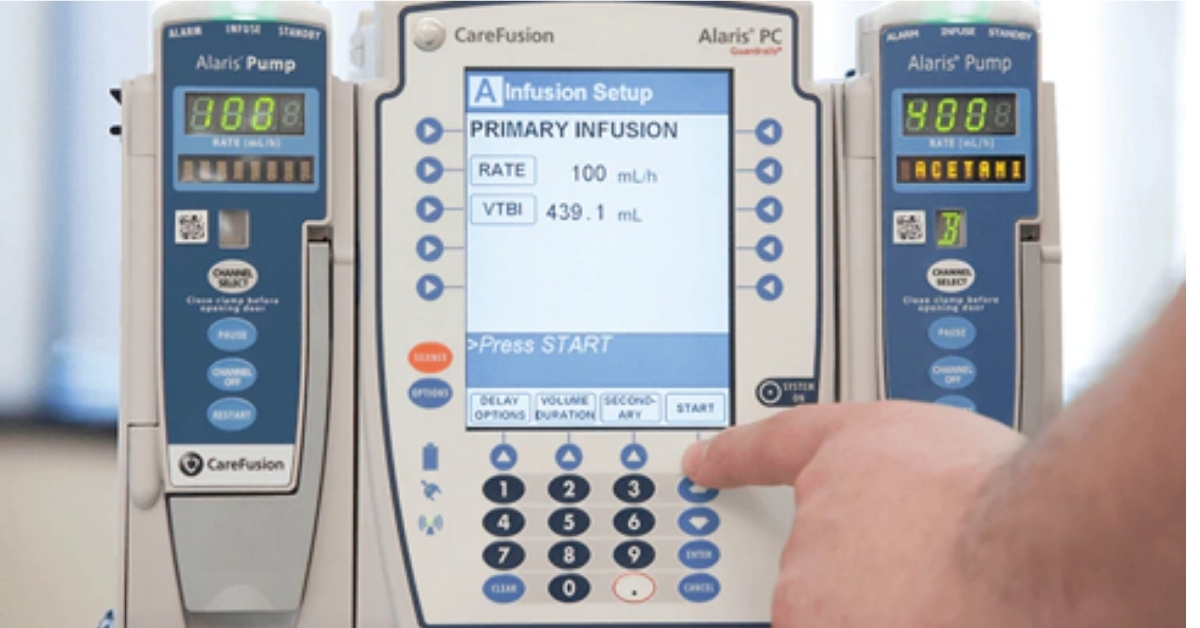
For accurate programming and monitoring, infusion pumps rely on backlit buttons and touchscreens.
Healthcare professionals may struggle to read the settings and increase programming errors if the backlighting is too dim.
On the other hand, if the backlight is too bright, it may cause unnecessary strain and distract the user.
Lumitex worked with a leading manufacturer of medical devices to develop a fiber-optic backlight solution for an IV infusion pump, resulting in a more efficient, cost-effective and high-performing product.
Patient Monitors
Patient monitors provide critical data, including heart rate, blood pressure and oxygen levels. If backlighting is insufficient, healthcare professionals may miss crucial alerts or data readings, which could delay responses in emergencies.
A study published in BMC Anesthesiology involving 120 anesthesiologists identified that an ideal patient monitor should feature intuitive controls and a large, high-resolution, non-reflective touchscreen display.
It emphasized the importance of a clear and easy-to-understand visual display, which is crucial for reducing errors and ensuring the information is visible under various conditions.
Proper backlighting plays a critical role in ensuring that the data displayed is consistently visible and interpretable for making informed decisions for patients.
Ventilators
Ventilators are essential for respiratory support, requiring clear visibility of interactive touch displays to ensure proper settings and monitoring.
If the backlight is too dim, healthcare professionals may fail to notice significant changes in the system, such as changes in settings or alarms.
However, if the backlight consumes too much power, it could cause energy inefficiency, potentially shortening the device’s lifespan.
Well-calibrated backlighting helps ensure the ventilator’s interface remains visible and efficient, improving both functionality and patient safety.
Vital Alerts and the Role of Lighting in Patient Safety
Diagnostic Imaging Equipment
Diagnostic tools like X-ray machines, MRI scanners and CT scanners rely on backlit displays to ensure that images and settings, such as calibration and positioning, are clearly visible.
Backlighting enhances image clarity, enabling more accurate diagnoses and smoother adjustments, which is especially important in high-pressure environments.
Medical device manufacturers should ensure that these devices are both accurate and user-friendly by incorporating high-quality backlighting solutions that enhance image clarity, streamline adjustments and minimize user errors.
Surgical Systems and Robotic Consoles
Illuminated controls in surgical systems and robotic consoles are critical during surgery.
Surgeons rely on clear, illuminated interfaces to navigate surgical instruments and settings, reducing fatigue and improving accuracy during lengthy procedures.
Backlighting ensures that the controls are visible at all times to help healthcare professionals maintain precision throughout complex surgeries.
Ventilators & Alarm Systems
For ventilators, backlit warning lights ensure that alarms signaling issues such as low oxygen or equipment malfunction are visible in all lighting conditions.
Immediate visibility of these alarms allows healthcare professionals to act quickly and decisively, reducing the risk of complications.
Home-Use Devices and the Importance of Intuitive Lighting
CPAP Machines & Glucose Monitors
At-home medical devices, such as continuous positive airway pressure (CPAP) machines and glucose monitors, also benefit from backlighting.
For CPAP machines, backlit control panels ensure that users can easily adjust the device settings, confirming the mask is sealed correctly and functioning properly.
This intuitive lighting guides users through setup and usage for improved patient experience at home.
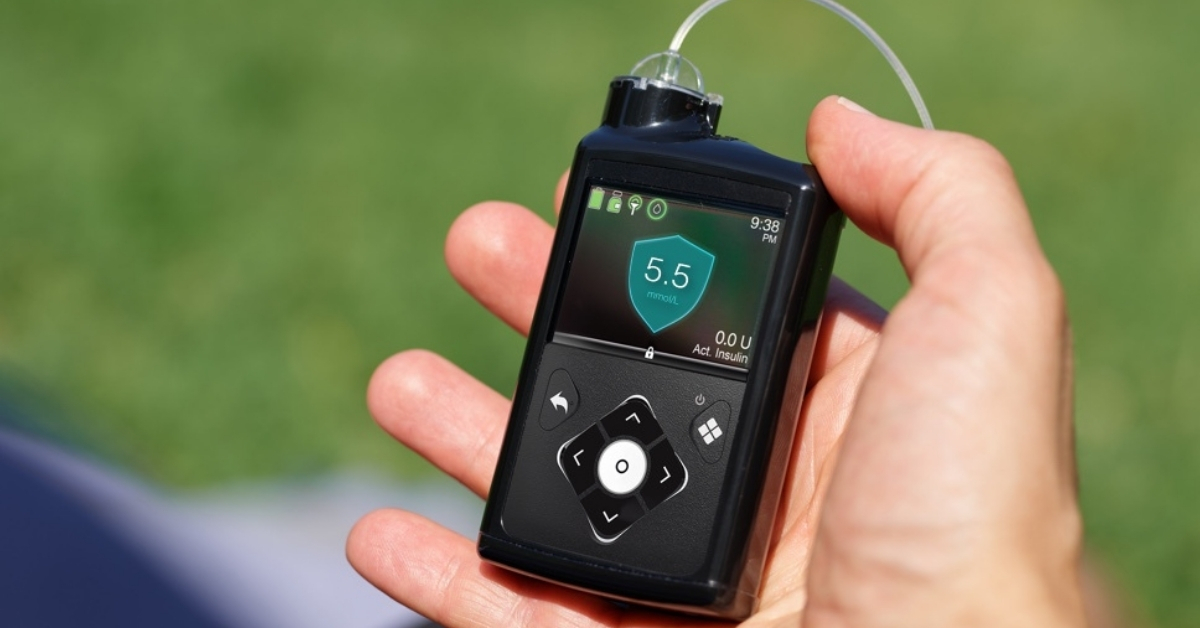
For glucose monitors, backlit screens provide clear visibility of blood sugar readings, so patients can interpret results and make necessary adjustments easily.
Backlighting ensures that home-use devices are accessible and easy to use, empowering patients to confidently take control of their health.
Intuitive Lighting for Correct Usage
Backlighting in home-use devices helps users by guiding them through each step of operation.
Whether confirming the correct position of a CPAP mask or ensuring that a glucose monitor is providing an accurate reading, backlighting makes self-care easier and more reliable.
This feature facilitates the better management of chronic conditions, ultimately enhancing patient care in a home setting.
Advantages of Custom Lighting Solutions in Medical HMI Devices
The importance of HMI in medical devices cannot be overstated. Devices that feature custom lighting solutions offer significant advantages.
Each device has unique lighting needs based on its functionality and the environment in which it operates.
Custom backlighting solutions optimize each device for clarity, help reduce errors and enhance overall device performance.
As medical devices become more complex, the need for interfaces that support quick and accurate decision-making becomes even more critical.
Research Insights
Research published in the Journal of Art, Design & Music reported that between 2015 and 2019, approximately 5% of all medical device recalls in the U.S. were caused by faulty user interfaces.
The same study noted that designers are often trained as “advertisers” rather than problem solvers. This approach leads to a lack of focus on the functional aspects of medical device development.
At Lumitex, our team employs a problem-solving approach by understanding the unique challenges that healthcare providers face when using medical devices.
We solve real-world problems using our customized backlighting solutions for device interfaces that are easy to use and obvious, especially during critical moments.
Enhance Accuracy with Lumitex Lighting Solutions
By offering custom lighting solutions, we help create devices that meet the highest standards of functionality and user experience.
We provide innovative solutions to enhance both patient experience and healthcare outcomes.
Talk to an expert to discover how backlighting can enhance the performance of your medical HMI devices.
Frequently Asked Questions
Why do compact diagnostic test readers need thin backlighting?
Compact diagnostic test readers have limited internal space, so the lighting system must stay thin while still supporting clear visibility. Thin backlighting helps improve readability without increasing device size.
How does backlighting improve medical HMI devices?
Backlighting improves medical HMI devices by making screens, indicators and interface elements easier to see. This can help users interact with the device more quickly and accurately.
What makes backlighting important in diagnostic devices?
Diagnostic devices often display important results or status information. Clear backlighting helps users read that information in different lighting conditions.
Can backlighting be customized for small medical interfaces?
Yes. Backlighting can be customized for size, brightness, uniformity and interface needs. This helps the lighting fit the device instead of forcing the device to fit a standard lighting component.
Why is light uniformity important in medical HMI backlighting?
Light uniformity helps keep brightness consistent across screens, controls and indicators. This makes information easier to read and reduces visual distractions during device use.
What causes hot spots in backlit medical interfaces?
Hot spots can happen when light is concentrated too strongly in one area of the interface. Poor LED placement, limited diffusion or weak optical control can make the backlight appear uneven.
Why do compact medical interfaces need ultra-thin lighting?
Compact medical interfaces have limited space for lighting components. Ultra-thin lighting helps support visibility without increasing the size or thickness of the device.
.jpg)

Comments