


How Lumitex Used Early-Stage R&D to De-Risk a Complex Medical Device Concept.
Acute Respiratory Distress Syndrome, or ARDS, is a life-threatening inflammatory lung condition that can cause severe hypoxemia, impaired gas exchange, mechanical ventilation, prolonged ICU care, and high mortality [1][2][3]. Because ARDS is clinically urgent and biologically complex, potential new therapies must be evaluated carefully across clinical need, technical feasibility, treatment timing, dose response, and safety.
Lumitex explored whether Photobiomodulation (PBM), could play a role in supporting treatment for ARDS. The project began with a clinical question: could targeted red and near-infrared light influence inflammatory response and respiratory function in a way that could eventually translate into a therapeutic medical device platform? [4][5][6]
Through early feasibility work, preclinical evaluation, expert review, and refinement of the research strategy, Lumitex gained a clearer understanding of the optical, biological, and development considerations involved. The project helped define the additional evidence and optimization that would be needed before evaluating future clinical or commercial pathways [I1][I2][I3].
The Challenge: ARDS Is Urgent, Complex, and Difficult to Treat
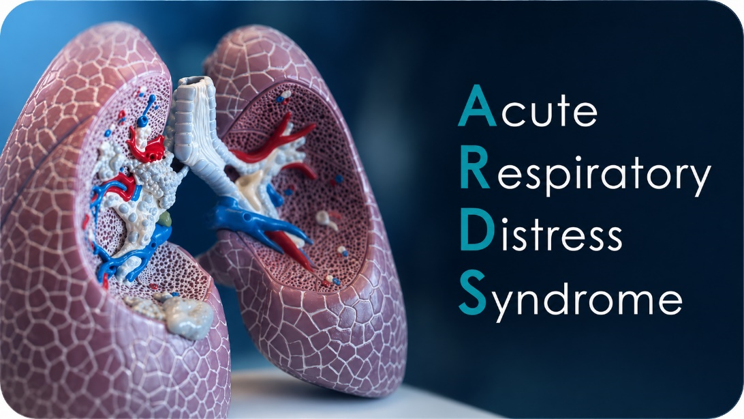
ARDS is an acute, diffuse inflammatory form of lung injury associated with poor oxygenation, bilateral lung infiltrates, and severe progressive hypoxemia [1]. ARDS is categorized by timing, imaging findings, origin of edema, and oxygenation measured by the PaO₂/FiO₂ ratio [2].
The clinical burden is significant. In the international LUNG SAFE study, ARDS represented 10.4% of ICU admissions and 23.4% of patients requiring mechanical ventilation. Hospital mortality increased with severity, from 34.9% in mild ARDS to 46.1% in severe ARDS [3].
This represents both a meaningful clinical problem and a high-risk development challenge. ARDS is not driven by a single pathway. Inflammation, oxygenation, fluid balance, vascular response, lung mechanics, tissue injury, and timing of intervention can all influence patient outcomes.
That complexity made ARDS an important but difficult area for optical innovation.
The Opportunity: Applying Light-Based Therapy to a High-Need Condition
Lumitex explored Photobiomodulation as a potential way to reduce inflammation and support lung recovery. PBM uses non-ionizing light sources, including LEDs and lasers, in the visible and near-infrared spectrum to create photophysical and photochemical responses in tissue [4]. Research has connected PBM effects to cellular signaling, mitochondrial activity, inflammatory modulation, and tissue repair processes [5][6].
The goal of the ARDS project was not simply to build a light-emitting device. It was to determine whether a controlled optical therapy concept could become a viable treatment platform for severe critical-care conditions.
Lumitex developed an ARDS PBM system capable of delivering multiple wavelengths, including 660 nm, 808 nm, and 905 nm light. The system was designed to control output across continuous and pulsed light settings, allowing the team to evaluate how wavelength, intensity, timing, and treatment frequency could affect biological response [I4][I5].
Refining the Research Strategy
Following the initial evaluation, Lumitex engaged clinical and scientific advisors to review the results and development approach. The feedback indicated that the original model, while clinically relevant, was highly aggressive and not ideally suited to optimizing a therapy that remained in an early research phase [I2].
Rather than continue directly into additional complex studies, Lumitex moved to a more flexible and cost-efficient research model. This allowed the team to more closely evaluate dose response, treatment timing, inflammatory markers, respiratory function, and potential mechanisms of action [I2][I3].
The revised research strategy included:
• proof-of-concept feasibility work,
• evaluation of multiple treatment regimens,
• longer-term observation,
• mechanism-of-action research,
• and safety and tolerability assessment [I3].
This pivot allowed Lumitex to isolate key variables and better understand which treatment parameters warranted additional investigation.
The subsequent research phase provided a clearer view of the treatment window and relevant biological endpoints. The studies evaluated respiratory measurements, oxygenation-related parameters, cytokine activity, inflammatory response, lung mechanics, and tissue findings [I7][I8].
Internal reporting indicated that an initial, unoptimized PBM treatment produced changes in respiratory and inflammatory measurements compared with placebo. Cytokine findings also trended in a direction that suggested a potential PBM-related effect [I2].
These findings were preliminary and were not intended to establish clinical efficacy. Their value was in helping Lumitex determine which variables deserved additional study and what would be required to build a stronger scientific foundation for the concept.
The Engineering Story: Building a Controlled Optical Platform
The ARDS project also demonstrated Lumitex’s core optical engineering capabilities.
The system had to deliver controlled light across multiple wavelengths and output modes. The ARDS PBM system included 660 nm continuous light, 808 nm pulsed light, and 905 nm pulsed light. Internal system documentation described how power output could be measured and adjusted by controlling pulse frequency, pulse peak current, and continuous current settings [I4][I5].
That control mattered because PBM is highly parameter-dependent. Wavelength, power density, energy density, treatment duration, tissue penetration, and treatment frequency can all influence therapeutic response [5].
For ARDS, this meant that optical engineering and biological response could not be separated. The device concept needed to support repeatable, adjustable treatment delivery so the team could evaluate which settings were most likely to create a meaningful response.
The Outcome: Creating a Stronger Foundation for Future Development
The ARDS initiative helped Lumitex clarify the scientific, clinical, and engineering questions that would need to be addressed before the concept could progress further.
The project identified several areas requiring additional investigation, including:
• dose optimization
• treatment timing and frequency
• inflammatory and vascular response
• model selection and mechanism of action
• and safety and tolerability
This is an important function of early-stage R&D. Its value is not limited to producing an immediate product. It also helps teams test assumptions, identify risk, refine technical requirements, and determine the most responsible path forward.
For Lumitex, the project demonstrated a disciplined innovation process: identify an urgent clinical need, develop a technically feasible optical platform, generate preclinical evidence, seek external expertise, and refine the research strategy based on what the data revealed.
Why It Matters
The ARDS project reflects how Lumitex approaches light-based medical innovation. The team explored a difficult clinical problem, applied optical and engineering expertise, and used early research findings to better define the requirements for future development.
The result was a clearer understanding of what a viable light-based ARDS therapy would require and a stronger foundation for future work in Photobiomodulation, therapeutic light delivery, and critical-care device development.
FAQ
Acute Respiratory Distress Syndrome, or ARDS, is a severe inflammatory lung condition that causes poor oxygenation, bilateral lung infiltrates, and impaired gas exchange. It can occur after conditions such as sepsis, pneumonia, aspiration, trauma, or other serious clinical insults [1][2].
Photobiomodulation, or PBM, is a form of light therapy that uses non-ionizing light sources, including LEDs and lasers, in the visible and near-infrared spectrum. PBM is studied for its ability to trigger photophysical and photochemical responses in tissue, including effects related to cellular signaling, inflammation, and tissue repair [4][5][6].
What stage did the ARDS project reach?
The project remained an exploratory R&D initiative. It progressed through optical system development, feasibility work, preclinical evaluation, and refinement of the research strategy. The findings helped Lumitex identify the additional scientific and technical evidence that would be needed before considering later-stage development [I1][I2][I3].
What did the project demonstrate?
The project demonstrated that PBM for ARDS is not a simple light-delivery challenge. The treatment concept depends on dose, timing, wavelength selection, treatment frequency, vascular response, inflammatory response, and model selection. It also demonstrated Lumitex’s ability to build controlled optical systems, test early concepts, interpret preclinical data, and pivot responsibly based on evidence [I1][I2][I4][I5].
How does this relate to Lumitex’s broader medical device development capabilities?
The ARDS project reflects Lumitex’s broader approach to medical device innovation: combining optical engineering, prototyping, preclinical testing, human-centered thinking, and commercialization awareness early in the development process. Even when a concept does not move directly to market, the R&D process can reduce risk, reveal technical requirements, and inform future product development.
Does Lumitex develop therapeutic light devices beyond illumination?
Yes. Lumitex works across medical lighting and therapeutic light applications, including projects that involve light delivery, optical system design, wavelength selection, prototyping, manufacturability, and commercialization support. The ARDS project is one example of how Lumitex has explored light-based therapy beyond traditional illumination.
External Sources
[1] Diamond M, Peniston HL, Sanghavi DK, Mahapatra S. “Acute Respiratory Distress Syndrome.” StatPearls / NCBI Bookshelf. Last updated January 31, 2024.
[2] ARDS Berlin Definition. Criteria include acute onset, bilateral opacities, non-cardiogenic respiratory failure, and oxygenation severity based on PaO₂/FiO₂ ratio.
[3] Bellani G, Laffey JG, Pham T, et al. “Epidemiology, Patterns of Care, and Mortality for Patients With Acute Respiratory Distress Syndrome in Intensive Care Units in 50 Countries.” JAMA. 2016;315(8):788-800.
[4] American Society for Laser Medicine and Surgery. “Photobiomodulation.” Definition and clinical overview of PBM/PBMT.
[5] Dompe C, Moncrieff L, Matys J, et al. “Photobiomodulation — Underlying Mechanism and Clinical Applications.” Journal of Clinical Medicine. 2020.
[6] Lu YS, et al. “Effects of photobiomodulation as an adjunctive treatment in lung diseases.” Lasers in Medical Science. 2023.
Internal Project Sources
[I1] Lumitex, “Q3 ARDS Presentation 1026,” October 26, 2023.
[I2] Lumitex, “ARDS Slides May 2024 Board Meeting,” May 2024.
[I3] Lumitex, “Lumitex Strategy V1: Photobiomodulation Treatment for ARDS,” December 2023.
[I4] Lumitex, “SYSTEM DESCRIPTION,” ARDS PBM System.
[I5] IPST, “Efficacy and Feasibility of Photobiomodulation Treatment for ARDS in a LPS-Instilled Rat Model,” executed January 31, 2024.
[I6] UTMB / Lumitex, “Protocol: Photobiomodulatory effect on Pneumonia/Sepsis ARDS,” sheep model protocol.
[I7] IPST, “Efficacy and Feasibility of Photobiomodulation Treatment for ARDS in a LPS-Instilled Rat Model,” proof-of-concept rat protocol.
[I8] IPST, “Efficacy of Photobiomodulation Treatment for ARDS in a 5-day LPS-Instilled Rat Model,” April 15, 2024.
.jpg)

Comments