


.jpg)
Welcome to our first inaugural Medical Lighting Report! We are very excited and proud to share this in-depth look at the current state of medical lighting.
For the past 35 years, Lumitex has been working with lighting for medical applications. We understand the importance that light can have in the medical arena and hope to share that potential with the world to change the standard of patient care and improve life with light.
In this report you will find information about trends in medical lighting, from lighting in hospitals to surgical lighting and phototherapy. We will discuss some up and coming technologies and advancements we see in the lighting space and how that can be used to add value to medical products and devices. We will also share some insights we learned from surveying professionals in the healthcare and medical device industries about their goals, priorities, and challenges with lighting in 2022.
We hope this report can help give you some guidance to the lighting landscape as we see it in 2022, and provide insight as to how to utilize and optimize lighting in your current and future medical products.

Although we probably don’t stop and appreciate the light when we enter a medical facility, the advancements in technology over the years are very evident. Quality lighting is essential in a healthcare environment and has a significant impact on the patients’ health and wellbeing. Light impacts all aspects of the patient and caregiver experience from surgery, environmental safety, and patient comfort.
As patients and staff are impacted by lighting, it is important to make careful and informed lighting choices when designing medical devices that can impact circadian rhythms, infection control, surgical safety and proficiency in lighting, and therapeutic efficacy. In this lighting report, we will touch on key applications of lighting in healthcare and how advancements in technology have impacted medical lighting. While technology advancements are making lighting decisions more complex, it makes it possible to meet the changing needs of patients and caregivers. The following looks at how intentional lighting design can benefit patients and healthcare providers, as well as introduce new opportunities for light to add significantly to both the diagnosis and treatment protocols.
What Are Your Top Product Priorities in the Next 12 months?
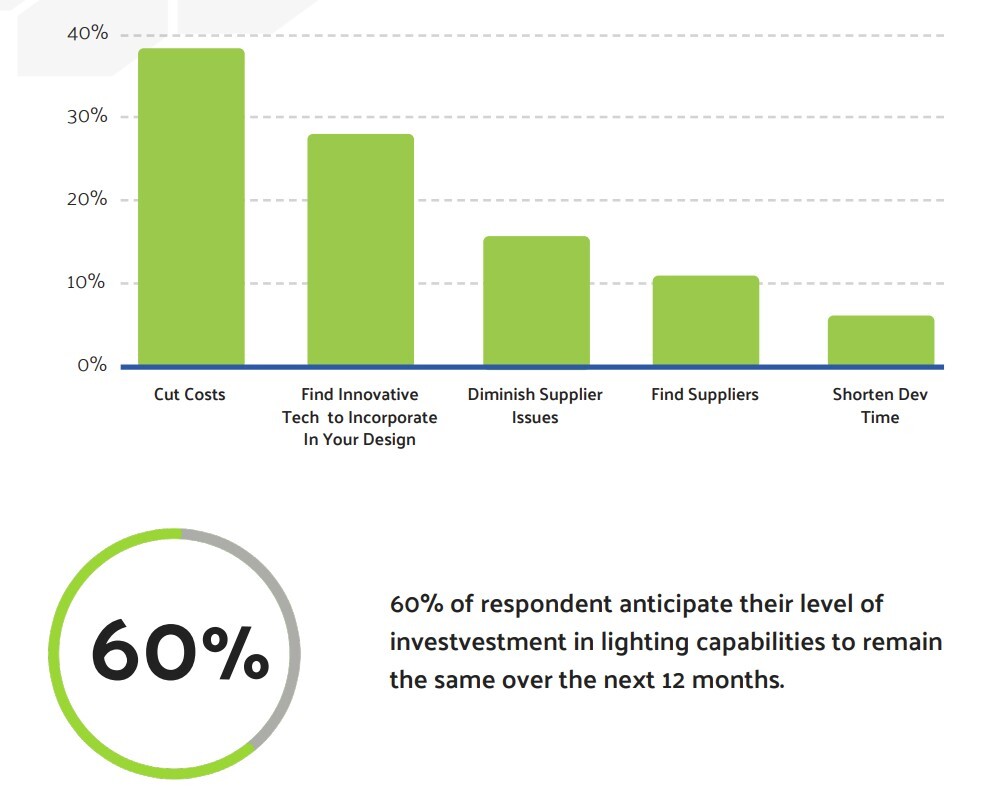
So What?
With ever present cost pressures, when companies do spend money it will be on new technologies.

One could consider the science of medicine to consist of two categories: diagnostics (the science of finding out what is wrong with the body) and therapeutics (the science of fixing what is wrong).
Interestingly enough, light has proven itself worth in both the diagnostic and therapeutic areas of the medical world.
Phototherapy has evolved impressively over the years as an emerging treatment modality to satisfy therapeutic needs. However, even more impressive is the progress made on the complementary side, where biophotonics, the interdisciplinary field at the intersection of biology and photonics, shows promise to satisfy a variety of diagnostic needs.
"The first phototherapy devices were simple skin surface treatment devices. Today the new frontiers of phototherapy deliver high power to internal tissues, dealing with obstacles like absorption and heat accumulation."
This article covers phototherapy (therapeutic) applications today and biophotonics (diagnostic) opportunities of the future.
Click here to read my full article
What lighting technical requirements are you most focused on for your device?
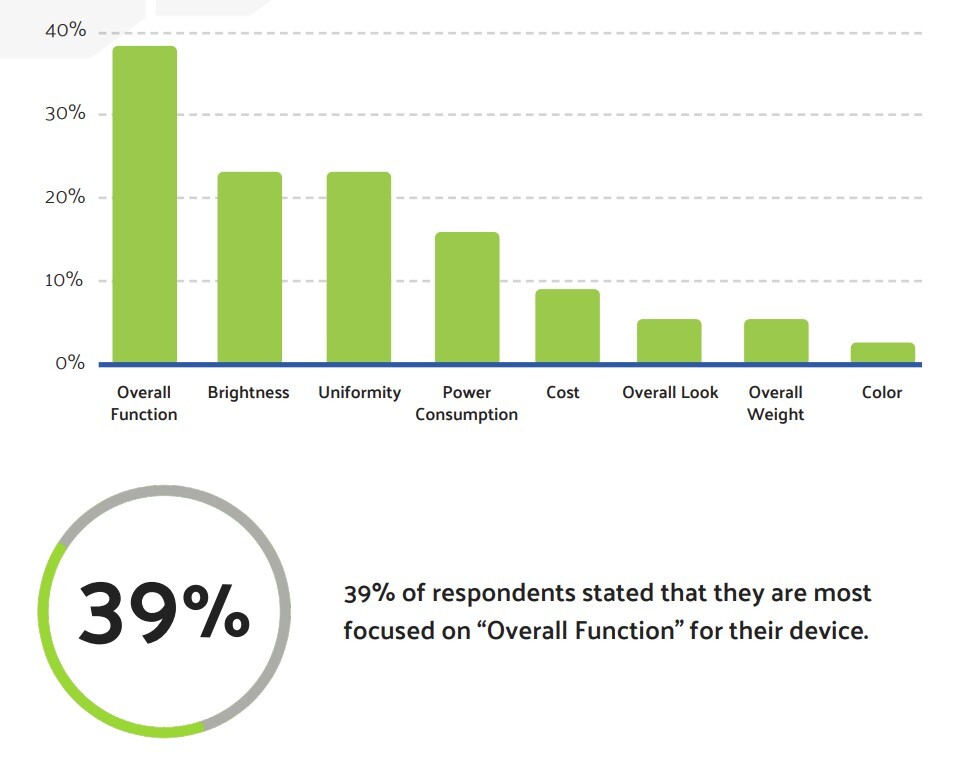
So What?
Though the overall function is often highest priority, you need to understand the interactions of all of the other requirements to make a system successful.

Surgical lighting ergonomics is a hot topic in the surgical world. Overhead lights can have limited positioning and may not provide adequate visibility in deep tissue or minimally invasive surgery. Headlamps are popular, but can be extremely cumbersome and can add strain to the neck during long surgeries, especially with additional COVID protective equipment.
One of the biggest and most concerning ergonomic issues caused by surgical lighting can be that unmodulated high-intensity light can result in eye strain and fatigue.
"25% of surgeons report that eye strain is an occupational health hazard, and one of the main causes of eye strain (asthenopia) is excessive or improper illumination."
In this article, we will focus on surgical lighting ergonomics related to eye strain and visibility during procedures and new trends that help improve these issues.
Click here to read our full article
Which of the following lighting accessories does your facility prefer?
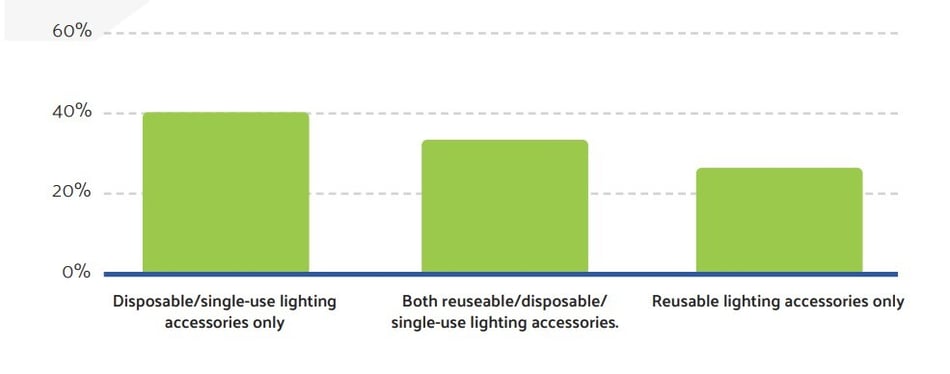
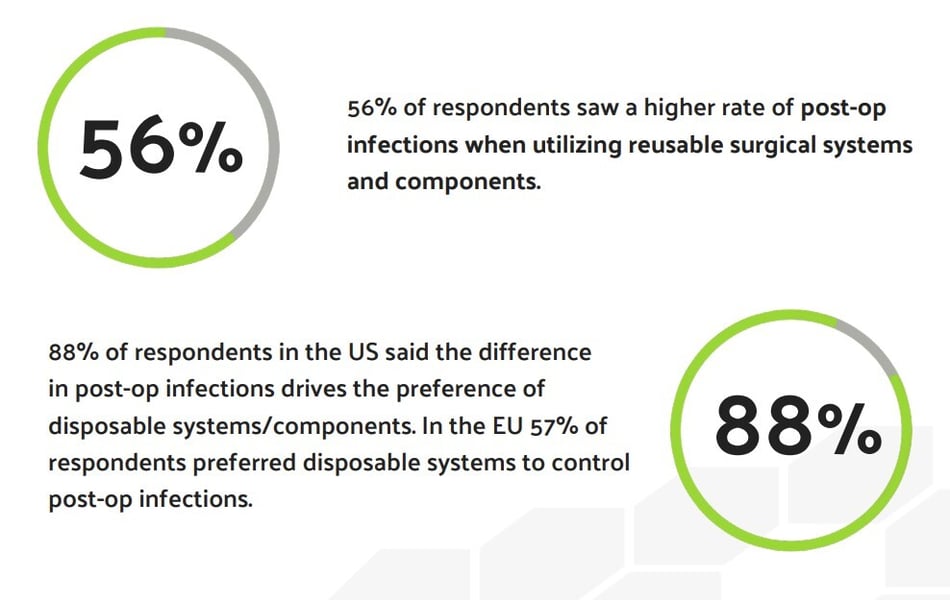
Which is more cost effective to the facility? Reusable vs. Single-Use surgical systems and components?
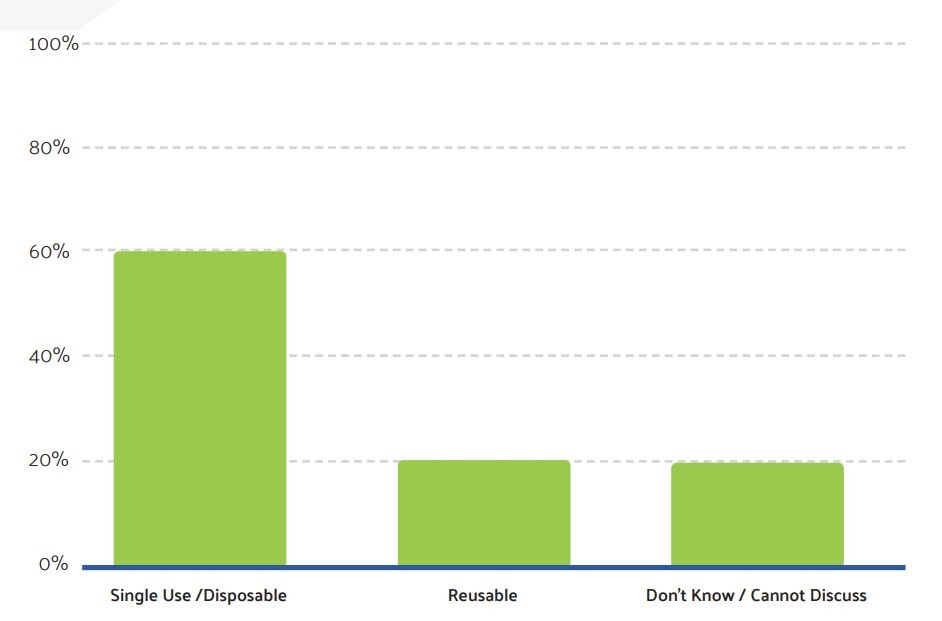
So What?
If you are not utilizing disposable aspects to your surgical systems devices, it is something you should consider. Hospital administrators feel that there is a higher rate of infection when utilizing reusable surgical system components and that drives their decision to purchase disposable products.

Healthcare-associated infections (HAIs) are infections that patients acquire while receiving medical treatment. The infections occur specifically in a hospital, outpatient surgery center, nursing home, rehabilitation facility, or while receiving wound care services. According to the Centers for Disease Control (CDC), HAIs pose a threat to patient safety and are preventable in many instances.
HAIs not only threaten patients’ health and life but bring additional economic burdens to patients and the healthcare system, including direct financial loss and prolonged hospitalization. Total hospital length of stay (LOS) is known to be extended by the occurrence of HAI. [source]
At any one time in the United States, 1 out of every 25 hospitalized patients is affected by an HAI, and according to the Centers for Disease Control and Prevention, an estimated 99,000 die from their infection. [source].
This article will discuss the different types of HAIs and how light can support the prevention efforts for these types of infections.
Click here to read our full article
When designing light into a medical device, what are the biggest challenges you face?
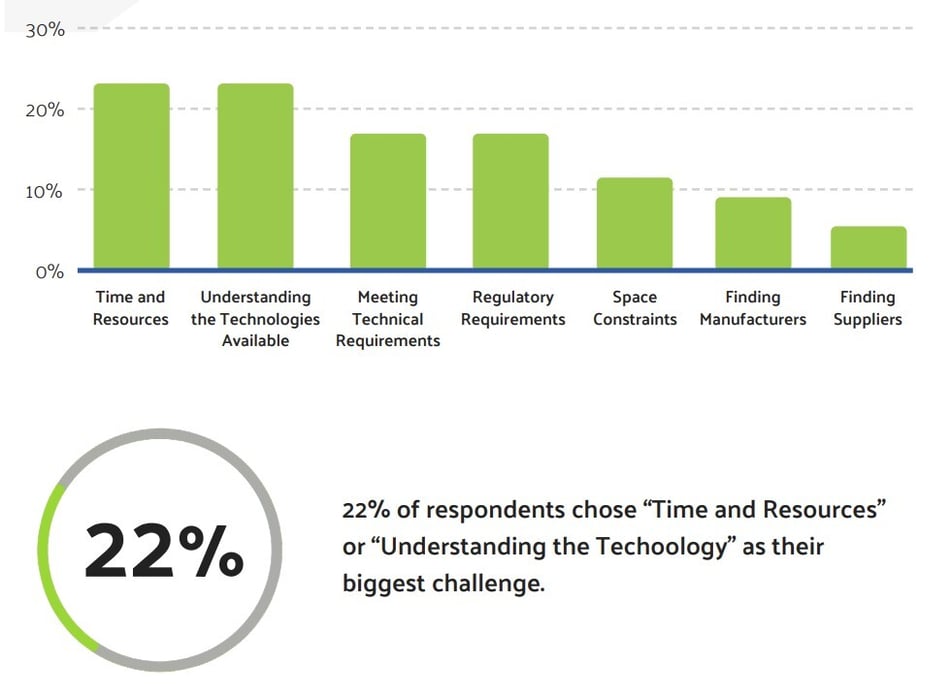
So What?
Dedicating time and resources to lighting your medical device can be difficult, but well worthwhile. Up-front planning can prevent design and development issues down the road.

When thinking about hospital lighting, many people will automatically visualize the bright fluorescent lights throughout the building that make it feel sterile and clean. With advancements in technology and knowledge around the impact light can make on physical and emotional health, hospitals are now starting to consider taking a different approach to their lighting efforts.
This article will talk about the current state of hospital lighting and how we see it changing in the future.
Click here to read my full articleSelecting appropriate illuminance levels, color temperatures, color rendering properties, and light distribution is critical in making health care workers’ visual task completion easier.
What Areas Do You Feel Light can Add Value to the Medical Devices You Develop?
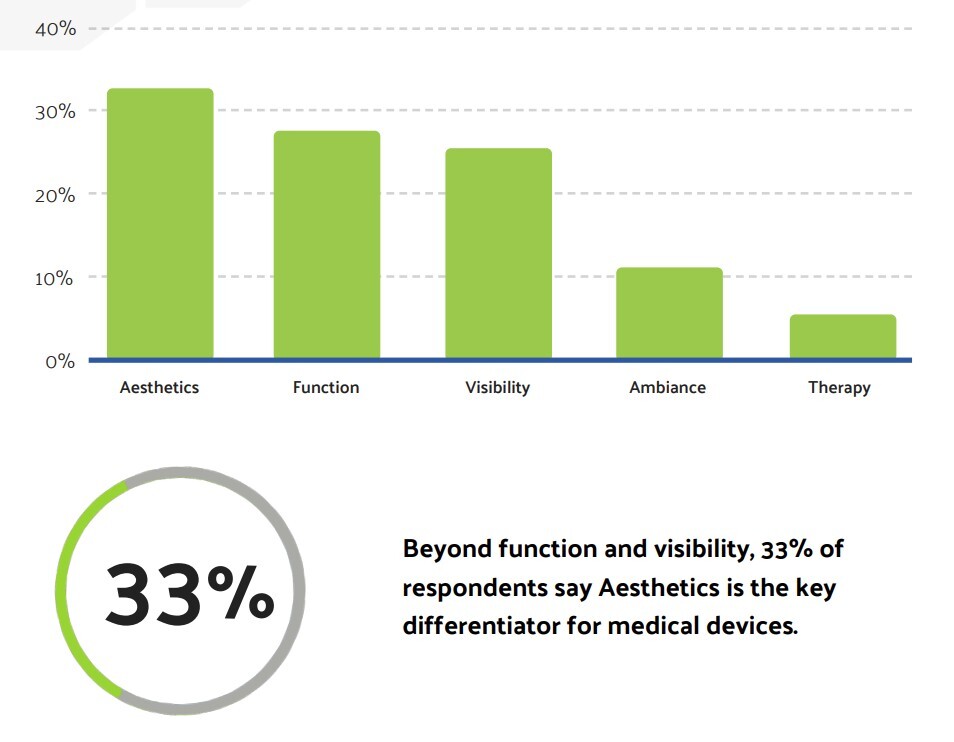
Did You Know?
Light therapy has been proven since the 1950’s, and it has been studied for decades in multiple medical applications. Light can be used beyond the aesthetic, when applied properly many therapeutic benefits can occur.